There’s a real disconnect right now between professional wrestling and the pulse of modern pop culture—and it’s not subtle. For something that once defined cool, wrestling today often feels like it’s chasing trends instead of setting them. That’s the core issue: wrestling used to lead culture. Now it reacts to it, and usually a step too late.
Look back at different eras and you can clearly see when wrestling felt culturally relevant. During the late ’90s, figures like The Rock and Stone Cold Steve Austin weren’t just wrestlers—they were attitude. They spoke like real people, carried themselves like stars outside the ring, and blurred the line between character and identity. Then you move into the 2000s and early 2010s with names like John Cena, Randy Orton, and even later Roman Reigns—these were positioned as the faces of the company, but their “cool factor” often came from presentation, not authenticity.
That’s the difference.
Today, wrestling has talent—a lot of talent—but very few feel organically cool. Not “script says they’re cool,” not “camera angles make them look cool,” but effortlessly cool. The kind of cool where if you saw them outside wrestling, you’d still think, “yeah, that person has something.” That energy is missing.
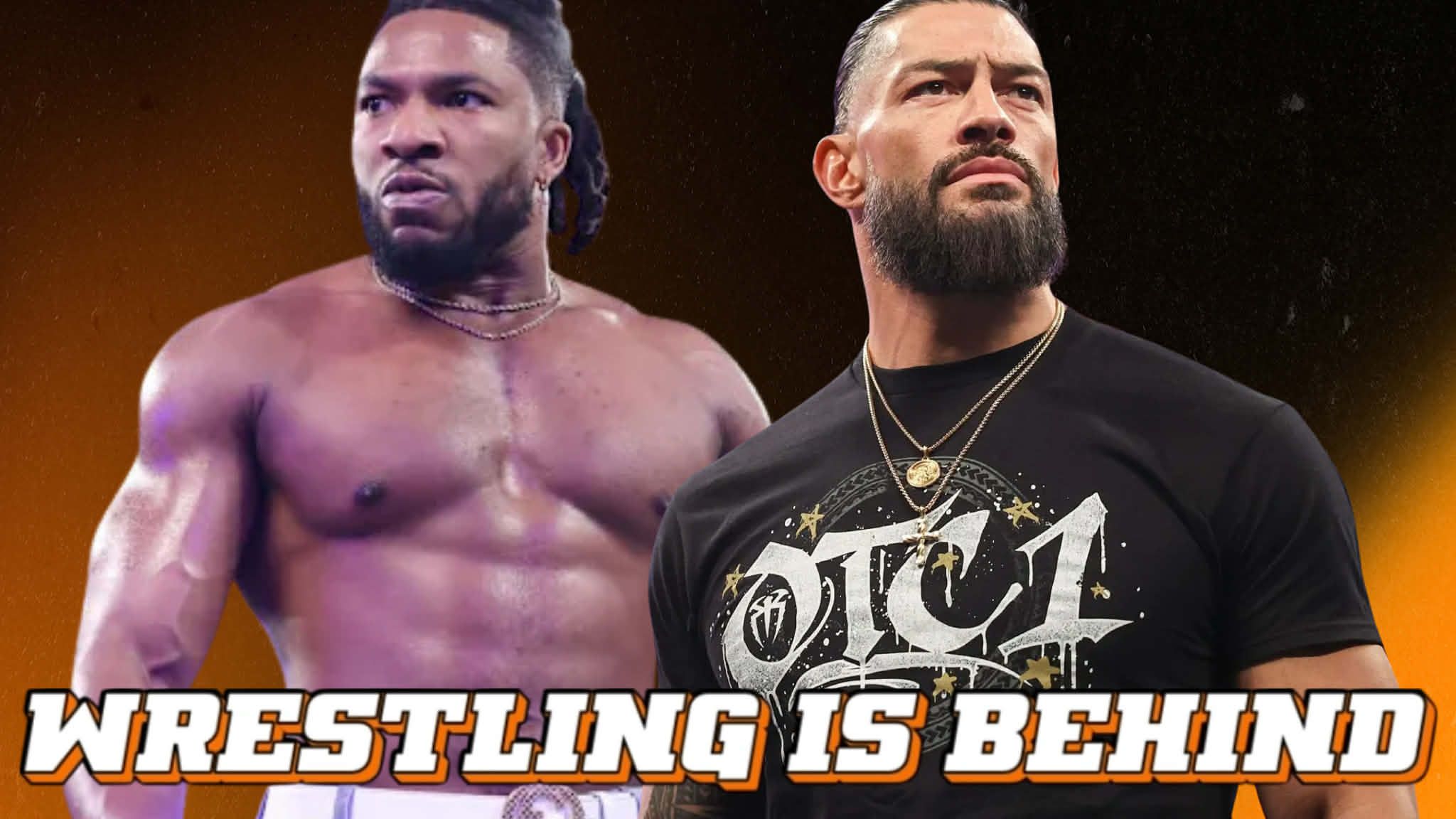
Take rising names like Trick Williams and Jevon Evans. You can see flashes of it. Trick especially has charisma that feels natural—his voice, his confidence, his rhythm. Jevon has that raw, unpredictable energy. But they’re not fully there yet because the system hasn’t allowed them to fully become that. They’re still being shaped, still being filtered, still being packaged.
And that’s where the bigger problem lies: the machine.
Modern wrestling, especially at the highest level, is heavily curated. Promos are structured. Characters are “optimized.” Moments are manufactured. And while that creates consistency, it kills authenticity. Cool doesn’t come from perfection—it comes from imperfection. From unpredictability. From feeling like what you’re seeing could exist outside the ring.
When you look at someone like Roman Reigns in his current run, he’s compelling, dominant, and important—but does he feel like a cultural tastemaker? Not really. He feels like a well-executed character. Same with Randy Orton—legendary, polished, but not defining cool. Even John Cena, at his peak, was more of a symbol than a vibe. The last time wrestling had someone who felt like they could walk into any room—music, fashion, sports, Hollywood—and belong without adjusting… that’s rare.
And that’s why it feels like wrestling is behind.
Pop culture today is driven by authenticity. Whether it’s music, streaming personalities, athletes, or influencers—people gravitate toward what feels real. Not perfect, not overly produced, but real. Wrestling, ironically, is one of the few spaces where “being real” is still heavily controlled.
So when you say it’s time for someone not pushed by the machine to step up—that’s exactly it.
The next truly “cool” wrestler probably won’t come from a perfectly timed push or a carefully planned rollout. They’ll come from someone who forces the system to adjust to them. Someone whose personality can’t be contained by scripts. Someone who brings their real-life energy into the ring instead of putting on a “wrestling personality.”
Think less “top guy” and more “cultural presence.”
That person might not even look like what wrestling traditionally pushes. They might not cut textbook promos. They might not wrestle a “perfect” style. But they’ll have something undeniable—something that makes fans feel like they’re discovering a person, not being introduced to a character.
Because at the end of the day, cool can’t be written.
It can’t be produced. It can’t be forced.
It has to be lived.
And until wrestling allows more space for that—on every level, from indies to the mainstream—it’s going to keep feeling like it’s outside the culture instead of at the center of it.
The potential is there. The talent is there.
Now it just needs someone bold enough—and real enough—to break through and redefine what “cool” in wrestling actually looks like again.