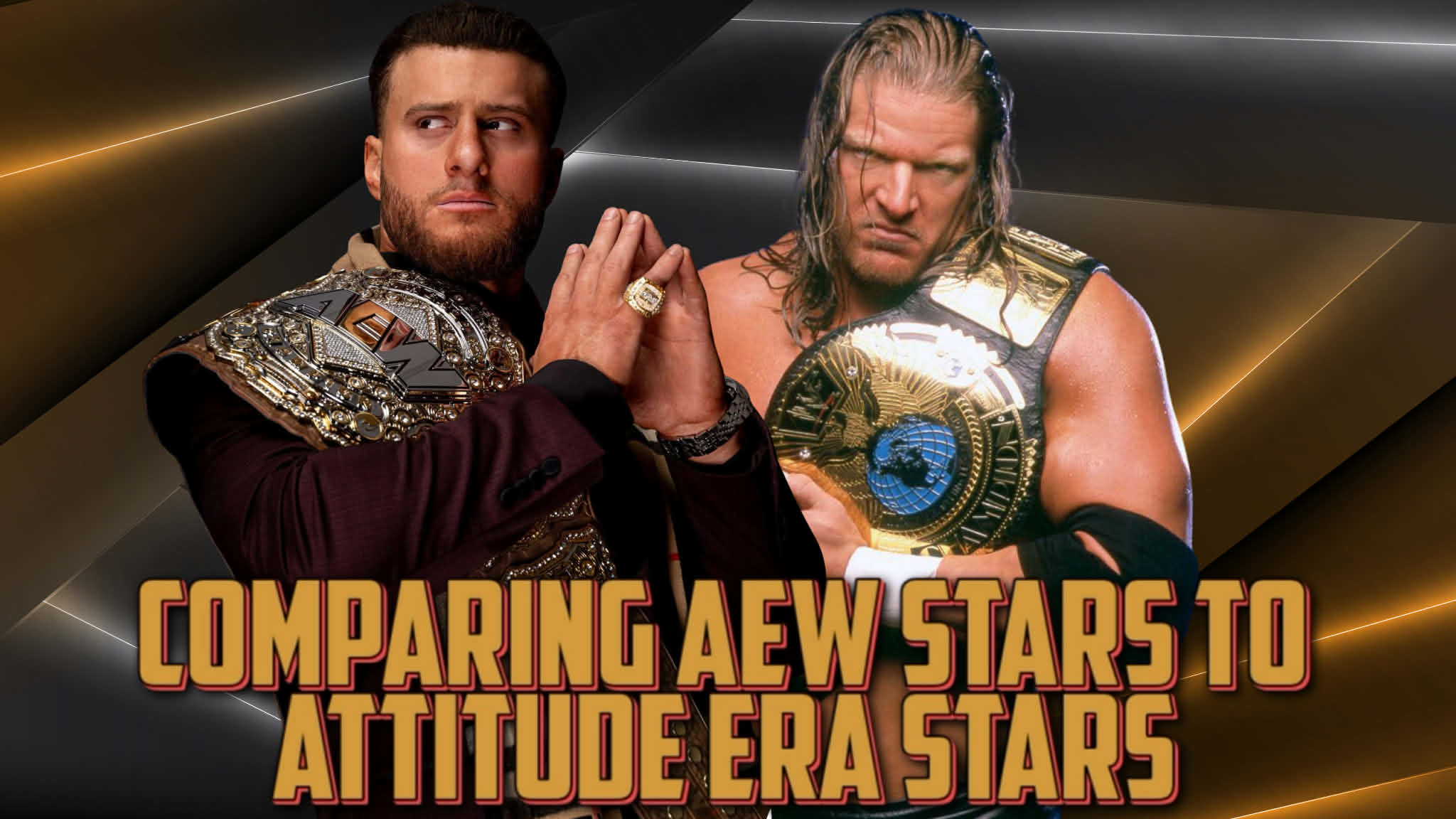
Professional wrestling evolves with every generation, yet certain archetypes never truly disappear. In today’s AEW landscape, echoes of the Attitude Era can be seen in the personalities, intensity, and in-ring styles of its biggest stars. From MJF’s cerebral dominance reminiscent of Triple H to Hangman Adam Page’s defiant grit channeling Stone Cold Steve Austin, the parallels are striking. Swerve Strickland’s charisma mirrors The Rock, while Kenny Omega’s show-stealing brilliance recalls Shawn Michaels. Though separated by eras, these performers embody timeless traits that connect wrestling’s past to its present in compelling, modern ways. Let’s get into it!
MJF & Triple H (HHH)
Similarities:
- Cerebral villains: Like Triple H in the late ’90s/early 2000s, MJF thrives on being calculating and manipulative rather than chaotic.
- Elite presentation: Both carry themselves as wrestling “royalty.” Suits, confidence, championship aura — they present themselves as the industry standard.
- Psychological warfare: They attack opponents verbally before physically, breaking them down mentally.
- Long-game storytelling: Triple H’s reigns were built on layered feuds; MJF similarly builds programs around deep personal angles.
- Main-event heel energy: Both are at their best as the top antagonist the company revolves around.
Hangman Adam Page & Stone Cold Steve Austin
Similarities:
- Anti-hero core: Neither is a traditional superhero babyface. They’re flawed, stubborn, and emotionally driven.
- Blue-collar identity: Austin represented rebellion against authority; Hangman represents self-made grit and independence.
- Organic fan connection: Both became beloved not because they were corporate favorites, but because fans saw authenticity.
- Brawling edge: While Hangman is more athletic, both can turn a match into a gritty fight.
- Emotional intensity: Austin’s rage and Hangman’s internal struggles both fuel their performances.
Swerve Strickland & The Rock
Similarities:
- Unmatched charisma: Both command attention the second they appear.
- Swagger and confidence: Swerve carries himself like a star — similar to Rock’s effortless cool in the late ’90s.
- Promo rhythm: Smooth delivery, controlled cadence, and the ability to make insults sound stylish.
- Crossover presence: Rock had mainstream aura; Swerve feels like a cultural tastemaker in today’s landscape.
- Heel cool factor: Even when villainous, fans gravitate toward them.
Kenny Omega & Shawn Michaels (HBK)
Similarities:
- In-ring innovators: Both revolutionized match pacing and athletic storytelling.
- Big-match performers: HBK was “Mr. WrestleMania.” Omega is known for delivering classics in high-pressure settings.
- Theatrical selling: Dramatic facials, emotional comebacks, and explosive finishing stretches.
- Athletic precision: Speed, timing, and creativity define their work.
- Faction leaders: Michaels had DX; Omega led The Elite — both central to influential stables.
Will Ospreay & Chris Jericho
Similarities:
- Reinvention masters: Jericho evolved constantly; Ospreay has transformed from junior heavyweight aerialist to heavyweight main-eventer.
- International acclaim: Both built global reputations beyond one promotion.
- Hybrid style: Jericho blended technical skill with showmanship; Ospreay mixes aerial brilliance with striking and storytelling.
- Confidence bordering on arrogance: Both radiate belief in being among the best in the world.
- Longevity potential: Jericho adapted to stay relevant; Ospreay shows similar adaptability.
Here’s the comparison in the same format as before, focusing strictly on similarities:
Eddie Kingston & Mick Foley
Similarities:
- Raw authenticity: Both feel completely real. Their promos sound less scripted and more like personal confessions.
- Emotional storytelling: Foley’s ability to make fans feel sympathy mirrors Kingston’s deeply personal, heart-on-sleeve delivery.
- Pain tolerance as character: Foley built a legacy on absorbing punishment; Kingston’s wars carry that same sacrificial intensity.
- Underdog spirit: Neither was the traditional “chosen” star — they earned respect through grit and connection.
- Connection with the audience: Fans rally behind both because they feel human, flawed, and genuine.
Brody King & Kane
Similarities:
- Intimidating presence: Both command attention through sheer size and aura.
- Controlled destruction: Kane’s explosive offense parallels Brody’s heavy, punishing strikes.
- Dark presentation: Brooding entrances and ominous energy define both performers.
- Physical dominance: They overwhelm opponents with power rather than flash.
- Silent menace: Neither relies heavily on lengthy promos — their presence and actions speak louder than words.
Kyle Fletcher & Kurt Angle
Similarities:
- Technical base: Angle’s Olympic-level grappling set him apart; Fletcher similarly leans on crisp, structured wrestling.
- Athletic explosiveness: Both combine strength and agility seamlessly.
- Serious competitor aura: Angle could shift from comedy to killer instantly — Fletcher carries that competitive legitimacy.
- Rapid improvement curve: Angle developed shockingly fast; Fletcher’s growth suggests similar upside.
- Big-match composure: Neither looks overwhelmed under pressure.
Jon Moxley & The Undertaker
Similarities:
- Aura of danger: When they walk out, it feels serious.
- Locker room general energy: Undertaker was a respected enforcer; Moxley carries similar “ace of the company” credibility.
- Hard-hitting style: Physical, punishing matches with a willingness to endure pain.
- Mythic toughness: Both built reputations on resilience.
- Presence over flash: Neither relies on flashy athleticism — it’s about intensity and believability.
Final Thought
While none of these AEW stars are carbon copies of Attitude Era legends, each reflects a modern evolution of archetypes that defined that era:
- The cerebral kingpin (MJF / Triple H)
- The rebellious anti-hero (Hangman / Austin)
- The charismatic megastar (Swerve / Rock)
- The show-stealing workhorse (Omega / HBK)
- The evolving global performer (Ospreay / Jericho)
- The emotionally driven underdog (Kingston / Foley)
- The looming destructive force (Brody King / Kane)
- The elite technical prodigy (Fletcher / Angle)
- The locker room dark ace (Moxley / Undertaker)
Who else do you got? Leave your comments below.